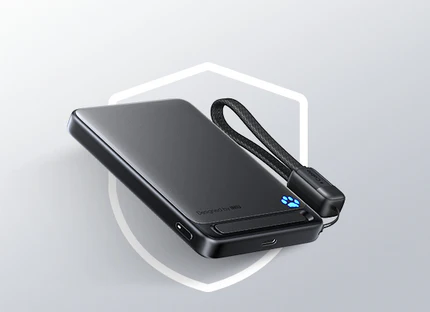
Why Your Portable Charger Might Not Be the Right Fit for Your Lifestyle
In an era where our lives are tethered to digital screens, “low battery anxiety” has become a nearly universal experience. To combat this, most consumers immediately reach for the first portable charger they see with high ratings, assuming all backup power is created equal. However, the frustration begins when that device doesn’t fit your actual lifestyle—perhaps it’s too heavy for your pocket, or its technical specs simply aren’t designed for your hardware. Understanding that your power needs are as unique as your daily routine is the first step toward finding a tool that truly supports your mobility.
The Productivity Trap: When Gear Fails the Professional
The modern professional no longer works exclusively from a desk, but this “work-from-anywhere” freedom relies on a fragile tech ecosystem. A common mismatch occurs when a user relies on a standard USB charger that lacks the wattage required to sustain a laptop under a heavy workload. If your charger outputs only 15W while your workstation demands 65W, you will find your battery percentage dropping even while plugged in. This technical gap turns a supposed productivity tool into a liability, proving that a charger isn’t “suitable” just because it has a high capacity—it must also meet the high-performance demands of your professional gear.
Specialized Gear vs. Generic Solutions
Beyond raw power, compatibility with your specific smartphone ecosystem is where many generic chargers fall short. For instance, an iPhone user might buy a bulky, wired power bank only to find it cumbersome for a lifestyle that favors mobility and speed. In this case, the device is unsuitable because it lacks the magnetic alignment or specific fast-charging protocols found in a dedicated power bank for iPhone. Choosing a generic solution often leads to slower charging speeds and a clunky user experience, reminding us that hardware synergy is just as important as battery size.
Assessing Capacity Versus Physical Reality
The most common mistake is assuming that “more is always better.” While a high-capacity unit offers peace of mind, it often comes with a physical cost that many users aren’t prepare for.
The Weight of High Capacity
A 30,000mAh battery is a powerhouse, but it can weigh over a pound. For a daily commuter who only needs a quick boost to get through a train ride, carrying such a “behemoth” is a mistake. If the device is too bulky to fit in your bag comfortably, you’ll likely end up leaving it at home, rendering it useless when you actually need it.
Underestimating Your Power Needs
Conversely, many users opt for ultra-slim chargers because they look sleek. However, if you are using your device for high-brightness navigation or video editing, these small units often fail to provide even one full charge, leading to a false sense of security during long days away from an outlet.
Compatibility and Technical Bottlenecks
Even when the capacity seems right, internal hardware limitations can create significant bottlenecks. The internal circuitry and supported protocols determine whether your power bank is a versatile tool or a slow, frustrating accessory.
The Speed Gap and Power Delivery
Your power source might work for your phone but crawl when connected to a tablet. This mismatch often happens when users rely on outdated hardware that lacks USB-C Power Delivery (PD) technology. Without this “handshake” protocol, your charger cannot negotiate the maximum safe wattage for modern devices.
Port Selection and Cable Confusion
The transition from USB-A to USB-C has left many users with a “cable mess.” If your new smartphone uses USB-C, but your older backup battery only has USB-A ports, you are force to carry extra adapters, which ruins the convenience of a truly mobile setup.
Lifestyle Mismatches: Environment and Regulations
Beyond technical specs, your physical environment and travel habits dictate which charger is truly “suitable.” A device that thrives in a controlled indoor setting may fail spectacularly when exposed to the unpredictable elements of travel or nature.
The Office Professional vs. The Adventurer
A sleek, glass-finished device might look beautiful in a boardroom, but it is entirely unsuitable for rugged outdoor environments. For those who enjoy hiking, specialized features like shockproof shells or water resistance are far more valuable than aesthetic appeal.
Airline Regulations and Travel Constraints
International travelers face unique constraints. Most airlines have a strict 100Wh limit (roughly 27,000mAh). If your equipment exceeds this without prior approval, it will likely be confiscate at security, leaving you powerless for your flight.
Conclusion
The “best” charger on the market isn’t necessarily the best one for you. It is the one that aligns with your specific devices, fits your daily carry, and meets the technical demands of your workflow. By looking beyond the marketing fluff and focusing on synergy, you can find a power solution that truly enhances your lifestyle rather than becoming another piece of clutter in your drawer.
Disclaimer
This article is intended for general informational purposes only. The descriptions, examples, and technical references are based on common consumer electronics standards and typical usage scenarios, but individual devices, power banks, and charging technologies may vary by brand, model, and region.
Battery capacities, charging speeds, airline regulations, and device compatibility are subject to change and should always be verified with the manufacturer, airline, or relevant authority before making a purchase or traveling. The author and publisher are not responsible for any loss, damage, device malfunction, or inconvenience resulting from reliance on the information presented in this article.
Readers should use this content as a general guide and conduct their own research to ensure a portable charger meets their specific technical, safety, and lifestyle requirements.