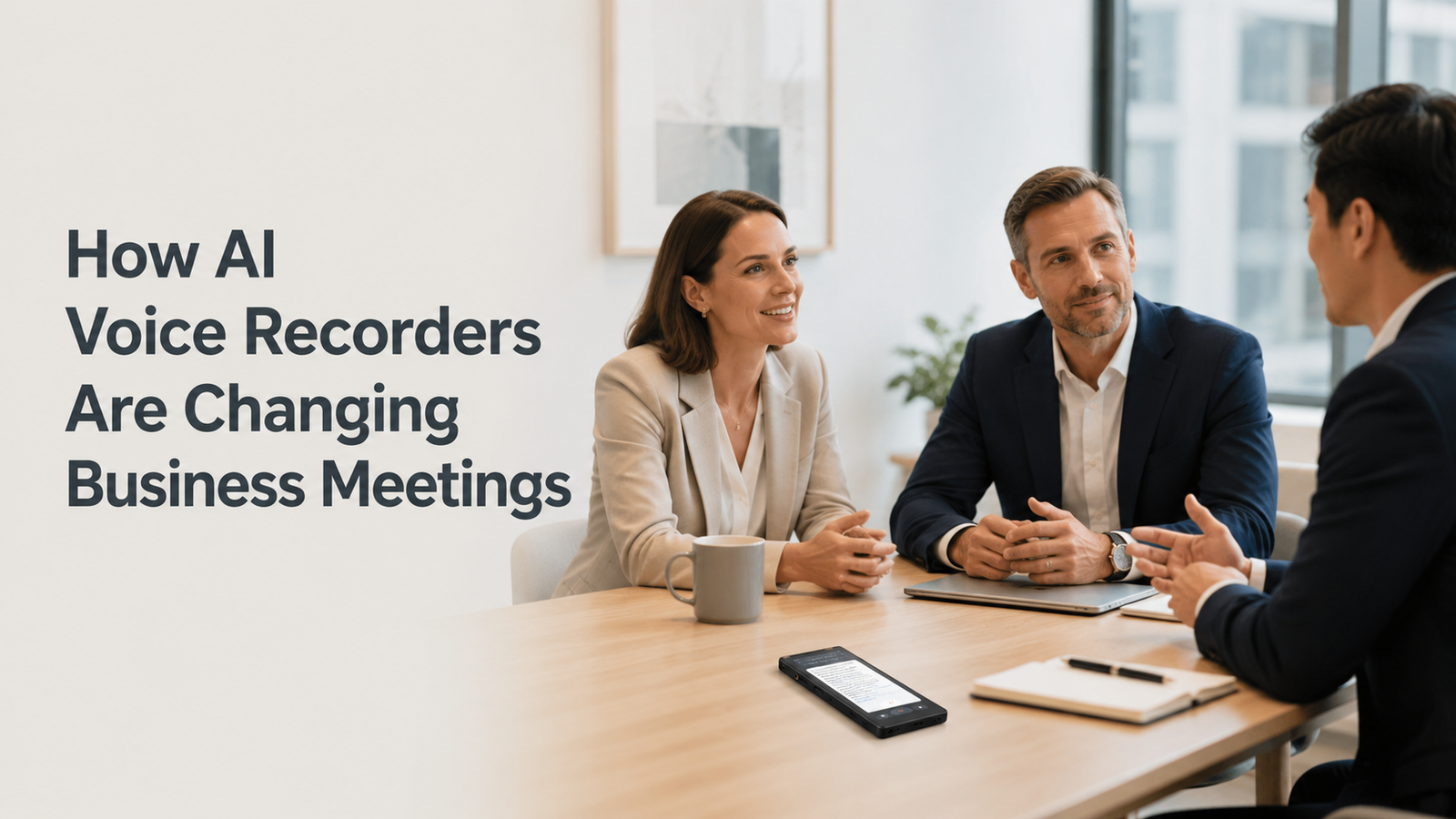
How AI Voice Recorders Are Changing Business Meetings
Business meetings have always depended on good communication, but the way teams capture and use meeting information is changing quickly. In the past, someone would take handwritten notes, record audio on a basic device, or rely on memory after the discussion ended. That approach worked when meetings were shorter and simpler. Today, business conversations are faster, more detailed, and often spread across in-person rooms, online calls, hybrid teams, and international partners.
This is why AI voice recorders are becoming more useful in modern business settings. Tools such as iflytek ai recorder s6 do more than capture sound. They help professionals record conversations, transcribe speech, summarize key points, organize follow-up tasks, and return to important details after the meeting ends. For teams that need clearer communication and faster execution, this shift can make meetings more productive.
Why Traditional Meeting Notes Often Fall Short
Traditional note-taking depends heavily on the person writing the notes. If the discussion moves quickly, important details can be missed. If several people speak at once, it may be hard to capture who said what. If the note-taker is also expected to participate, they may struggle to listen, think, respond, and write at the same time.
Basic audio recording solves part of the problem, but it creates another one. A long recording may contain useful information, but reviewing it later can take too much time. Professionals may need to replay several minutes just to find one decision, client request, or deadline. As a result, many recordings are saved but never fully used.
AI voice recorders help close this gap by turning meeting audio into more usable information. Productivity-focused brands like iFLYTEK are connecting speech technology with practical work scenarios, helping teams move beyond raw sound toward transcription, summaries, and structured review.
From Recording to Understanding
The biggest change is that recording is no longer the final step. In an AI-supported workflow, recording is only the beginning. After the meeting, the audio can become text, the text can become a summary, and the summary can become a set of next steps.
This matters because business meetings are rarely valuable just because they happened. Their value comes from what people understand and do afterward. A client meeting may include concerns that need follow-up. A project meeting may include risks that require action. A leadership meeting may include decisions that need to be shared with other teams.
With AI support, professionals can review the main points more quickly and reduce the time spent reconstructing what was discussed. This makes meeting information easier to use.
Helping People Stay Present in the Room
One overlooked benefit of AI voice recorders is that they can help people stay more present during meetings. When professionals worry about capturing every detail, they may focus more on writing than listening. This can affect the quality of the conversation.
A smart recording workflow gives users more confidence that key information can be reviewed later. Instead of writing every sentence, they can focus on questions, judgment, and discussion. This is especially helpful in client meetings, interviews, negotiations, training sessions, and strategy reviews.
For managers and team leaders, this can improve the way meetings feel. When participants are less distracted by manual note-taking, they can engage more naturally and respond more thoughtfully.
Making Follow-Up Easier
Many meetings fail not because the conversation was poor, but because follow-up was unclear. People may leave the room with different ideas about what was decided, who owns the next step, or when something is due.
AI voice recorders can support better follow-up by helping identify key decisions, discussion highlights, and action items. The human team still needs to confirm responsibilities and make final judgments, but AI can reduce the manual work required to prepare a useful recap.
For example, after a project review, a manager can check the summary before assigning tasks. After a sales call, a representative can review customer concerns before sending a proposal. After an interview, a journalist or researcher can return to important quotes and themes without searching through an entire recording manually.
Useful Across Different Business Roles
AI voice recorders are not limited to one type of professional. Sales teams can use them to capture customer needs and objections. Consultants can use them to preserve client context. Lawyers can use them for structured meeting records. Managers can use them to review decisions and responsibilities. Journalists and researchers can use them to make interviews easier to process.
The same core need appears across these roles: important spoken information must be captured clearly and turned into something useful. A simple recording may not be enough. Professionals need a way to organize and revisit the meaning of the conversation.
Modern AI recording tools show how the category is moving beyond basic audio capture. They reflect a growing need for smarter meeting tools that help professionals manage information before it becomes scattered or forgotten.
Supporting Hybrid and International Work
Modern business meetings often include people in different locations. Some participants may be in the room, others may join remotely, and others may speak in a second language. These situations make accurate meeting records even more important.
AI voice recorders can help create a clearer record for people who missed part of the conversation or need to review the meeting later. They can also support teams that work across time zones, where immediate clarification is not always easy.
For international teams, speech capture and language support can also improve collaboration. When meeting content is easier to review, teams can reduce misunderstandings and move faster after the discussion.
Choosing the Right AI Voice Recorder
When choosing an AI voice recorder for business meetings, professionals should look beyond basic recording quality. A useful device should support clear audio capture, reliable transcription, summaries, speaker-related organization, easy file management, and secure storage. It should also be simple enough to use during real meetings without interrupting the conversation.
The best tool is not always the one with the most features. It is the one that fits naturally into the meeting workflow. If a device helps users record, review, summarize, and follow up with less effort, it can become part of daily business productivity.
The strongest AI voice recorders are the ones that connect speech technology with practical work scenarios. For professionals who need a smarter way to capture and manage meeting information, this kind of device shows how AI recording tools are becoming business productivity tools, not just audio gadgets.
Final Thoughts
AI voice recorders are changing business meetings by making spoken information easier to capture, understand, and act on. They help reduce missed details, improve follow-up, and give professionals more confidence during important conversations.
They do not replace listening, judgment, or clear communication. Instead, they support the work that happens around meetings: recording, reviewing, summarizing, and turning discussion into action. As meetings continue to produce more information, smarter recording tools will become more important for teams that want to stay organized and make better use of every conversation.